MEGA vs Tresorit: Best Encrypted Cloud for Privacy Compared
Introduction to Encrypted Cloud Storage in 2025
In an era where digital lives are increasingly exposed, privacy-focused cloud storage has become a non-negotiable priority. By 2025, the digital landscape is riddled with escalating threats: data breaches are not just frequent but devastating, with the average cost reaching $4.45 million per incident. This financial toll underscores the vulnerability of traditional cloud storage, where sensitive information—from personal photos to corporate secrets—can fall into the wrong hands. Surveillance by governments and corporations has intensified, fueled by AI-driven monitoring and the proliferation of connected devices. As remote work and AI integration become ubiquitous, the need for ironclad end-to-end encryption (E2EE) in encrypted cloud storage has never been more urgent.
Encrypted cloud storage emerges as a beacon of hope in this storm. At its core, E2EE ensures that data is scrambled on the user's device before upload, accessible only to the intended recipient with the decryption key. Zero-knowledge architecture takes this further: even the service provider can't access your files, as they hold no knowledge of the encryption keys. These technologies empower users with true control, shielding against breaches where 97% of organizations face security issues from ungoverned AI systems.
Enter Mega and Tresorit, two titans in the privacy-focused cloud storage arena. Mega, founded in 2013 by internet entrepreneur Kim Dotcom as a spiritual successor to the shuttered Megaupload, prioritizes user empowerment through robust E2EE. Tresorit, launched in 2011 by former CERN scientists and based in Switzerland, brings an enterprise-grade rigor, leveraging Swiss privacy laws to deliver uncompromising security. Both services are built by privacy advocates committed to resisting data exploitation.
This article pits Mega vs Tresorit across critical dimensions—security, pricing, usability, collaboration, and support—to crown the superior choice for best encrypted cloud storage for privacy in 2025. In a world grappling with quantum threats and AI-powered attacks, selecting the right encrypted cloud storage service isn't just about storage; it's about safeguarding your digital sovereignty.
$4.45M
Average cost of a data breach in 2025 (Varonis Report)
Overview of Mega: Affordable Encrypted Cloud Storage
Mega's story is one of resilience and rebellion against centralized control. Founded in 2013 by Kim Dotcom—the controversial figure behind Megaupload—Mega was designed as a privacy-first cloud storage alternative to mainstream services like Google Drive or Dropbox. After Megaupload's 2012 shutdown amid piracy allegations, Dotcom vowed to create a platform where users, not corporations, hold the reins. Headquartered in New Zealand, Mega emphasizes user-controlled encryption and has grown into a global service with millions of users seeking best encrypted cloud storage.
At its heart, Mega offers zero-knowledge E2EE using AES-256 encryption, meaning files are encrypted client-side, and even Mega's servers can't decrypt them. The free tier is a standout: 20GB of storage, far more generous than competitors, allowing casual users to dip their toes without commitment. Cross-platform apps for Windows, macOS, Linux, iOS, and Android ensure seamless access, while file sharing features include password-protected links with expiration dates and customizable permissions. Bandwidth is unlimited for free users, making it ideal for quick shares in privacy cloud storage.
Looking ahead to 2025, Mega is poised for evolution amid tightening privacy regulations. Its focus on user-managed keys positions it well for handling AI-powered attacks, though it lacks the enterprise compliance of rivals in encrypted cloud storage.
Overview of Tresorit: Enterprise-Grade Privacy Cloud Storage
Tresorit's origins trace back to the particle accelerators of CERN, where its founders—Imre Rad and colleagues—applied scientific precision to data security. Launched in 2011 and headquartered in Switzerland, Tresorit draws on the country's storied neutrality and stringent privacy laws to offer a fortress-like encrypted cloud storage experience. A Swiss-based encrypted cloud storage provider, Tresorit partners with Swiss Post Digital and focuses on enterprise-grade security for sectors like finance, healthcare, and government.
The service's cornerstone is client-side E2EE with AES-256, ensuring zero-knowledge privacy. It complies with HIPAA for healthcare data and ISO 27001 for information security management, positioning it for quantum-resistant audits and blockchain-tracked compliance in the post-quantum era. Its Swiss/EU base provides advantages in compliance with GDPR evolutions and avoids U.S. CLOUD Act exposure, making it suitable for regulated industries in 2025. Secure team collaboration is a highlight: features like encrypted "Tresor" rooms allow controlled sharing among groups, with granular access controls. The free tier is modest—a 3GB trial—but paid plans unlock robust tools for professionals in best encrypted cloud storage for privacy.
By 2025, Tresorit is leading the charge into a post-quantum world. With quantum threats like the "Harvest Now, Decrypt Later" strategy—where adversaries store encrypted data today for decryption by 2035 using future quantum computers—Tresorit is integrating quantum-resistant encryption. Blockchain technology enhances audit trails, providing immutable proof of compliance in an era of evolving regulations like NIS2 and the AI Act. This forward-thinking approach positions Tresorit as a bulwark against AI-powered attacks, where 16% of breaches now involve AI, including deepfakes and adaptive phishing.
Quantum computers could decrypt data harvested today by 2035, making post-quantum cryptography essential for long-term cloud storage security (LinkedIn Pulse on PQC).

Mega vs Tresorit: Head-to-Head Comparison for Encrypted Cloud Storage
Security and Encryption in Mega vs Tresorit
Security is the battleground where Mega and Tresorit truly diverge, especially as 2025 brings AI-driven threats and quantum risks to the forefront in encrypted cloud storage. Both employ AES-256 E2EE in a zero-knowledge setup, but implementation details matter. Fundamentals for cloud data security include discovery, classification, access control, encryption, and key management, essential for protecting against credential abuse and compromise in AI-driven environments.
Mega relies on user-managed keys, giving individuals full control but placing the onus on proper key handling. It includes two-factor authentication (2FA) and has open-sourced parts of its codebase for transparency. However, its privacy policy prohibits data mining, and while independent audits exist, they're less frequent than Tresorit's. Against 2025 threats like AI-powered credential abuse—where the average time to identify a breach is 194 days—Mega's defenses hold, but user error remains a weak link in privacy cloud storage.
Tresorit elevates this with advanced key management, mandatory 2FA across all features, and regular independent audits. Its Swiss base shields it from U.S. CLOUD Act demands, and it complies with HIPAA and ISO 27001, crucial for regulated industries where healthcare breaches average $7.42 million. For quantum risks, Tresorit's hybrid post-quantum solutions align with NIST's first global standards for quantum-resistant algorithms, released in August 2024, accelerating PQC adoption and regulatory alignment with frameworks like HIPAA, ISO 27001, NIS2, DORA, and AI Act by 2025-2030. Cryptographic migration to PQC can take over a decade; organizations must assess data lifetimes, map legacy systems vulnerable to RSA/ECC, and implement hybrid PQC solutions for long-term security. Tresorit's zero-knowledge E2EE with advanced key management and 2FA positions it ahead for handling 2025 quantum and AI-powered attacks, contrasting with user-managed keys in services like Mega. Organizations using AI in security operations saved $1.9 million per breach compared to non-users, indicating AI's potential as a defensive tool when integrated with strong encryption.
In vulnerability assessments, Tresorit edges out: while Mega handles basic threats well, Tresorit's enterprise focus better counters sophisticated AI attacks and regulatory shifts in best encrypted cloud storage for privacy.
In 2025, 16% of breaches involved AI, with 37% via phishing and 35% using deepfakes; 63% of organizations lack AI governance, increasing cloud data exposure (Varonis Report).
Storage, Pricing, and Plans: Mega vs Tresorit Comparison
Storage and cost are practical deciders for many users in encrypted cloud storage. Mega shines with its free 20GB tier, expandable via achievements or referrals. Paid plans start at €4.99/month for Pro Lite (400GB, 1TB transfer), scaling to €29.99 for Pro III (16TB). It accepts crypto payments, appealing in an inflation-hit 2025 economy, and offers flexible add-ons for scalability. For users seeking even more budget-friendly secure options, our Cloud Comparison Tool filters providers under $5 per month, helping you evaluate Mega alongside similar affordable encrypted services based on your storage and security needs.
Tresorit's free offering is limited to a 3GB trial, emphasizing premium value. Premium plans begin at €10.50/month for 500GB (Solo), with Solo Business at €24/month for 2TB and teams. Enterprise options provide unlimited storage, ideal for scaling businesses. While pricier, Tresorit justifies costs with compliance features, and its EU data centers ensure GDPR alignment. U.S. breaches cost $10.22 million on average—the highest globally—highlighting the value of compliant privacy cloud storage.
| Aspect | Mega | Tresorit |
|---|---|---|
| Free Storage | 20GB | 3GB trial |
| Entry Paid Plan | €4.99/mo (400GB) | €10.50/mo (500GB) |
| Enterprise Scalability | Add-ons up to 16TB+ | Unlimited storage |
| Payment Options | Crypto, cards | Cards, invoices |
Value-wise, Mega offers bang for buck for individuals, while Tresorit's pricing reflects its robust security in a breach-prone world.
Usability and Performance: Mega vs Tresorit
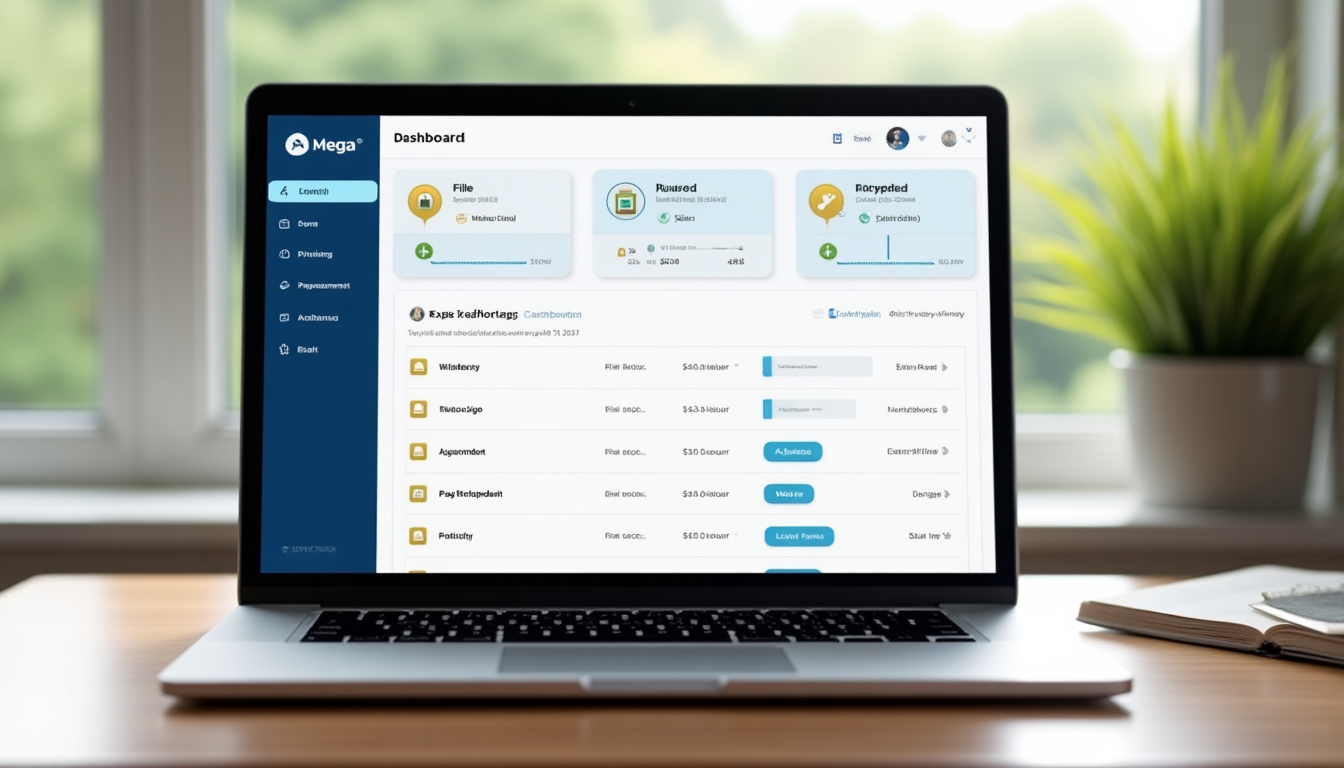
Ease of use can make or break adoption in best encrypted cloud storage. Mega's interface is intuitive and consumer-friendly, with a clean dashboard for quick uploads and a mobile app that feels native. Sync speeds are solid, benefiting from 2025's faster networks—expect efficient uploads on premium plans. Cross-device support is comprehensive, including web access and accessibility features like voice commands for visually impaired users.
Tresorit's dashboard is more professional, packed with collaboration tools that might overwhelm beginners but empower pros. Performance matches Mega in benchmarks, with reliable syncing even on large files, though its focus on security adds slight overhead. Mobile apps include advanced features like remote wipe, and web access is secure but less flashy. Both support desktop, mobile, and web, but Tresorit's steeper learning curve suits tech-savvy users.
File Sharing and Collaboration: Mega vs Tresorit Features
Sharing is where privacy meets practicality in privacy-focused cloud storage. Mega excels in link-based sharing: generate a URL with passwords, expiration (up to 30 days), and download limits. Versioning tracks changes, but real-time editing is absent. Revocation is instant, preventing leaks effectively. Web applications account for 25% of breaches via stolen credentials, making secure sharing critical. For deeper insights into team collaboration options, check our Google Drive vs OneDrive comparison, which explores scalable features and security for business workflows similar to Tresorit's secure rooms.
Tresorit's "Secure Rooms" enable team-based sharing with role-based access, ideal for businesses. Real-time collaboration, including comments and approvals, outpaces Mega's basics. Both prioritize privacy through E2EE links, but Tresorit's revocation and audit logs better suit sensitive workflows, countering risks like credential-based attacks that take 88 days to contain on average.
Customer Support and Reliability: Mega vs Tresorit
Support varies by audience in encrypted cloud storage. Mega leans on community forums, email, and a knowledge base—responsive but not 24/7. Uptime hovers at 99.9%, though past outages tied to legal issues linger in memory. Its New Zealand base ensures global availability.
Tresorit offers 24/7 chat, phone, and dedicated account managers for enterprises. Uptime is exemplary at 99.99%, with EU data centers minimizing latency. Compliance is a strength, avoiding U.S. legal overreach. Breaches involving remote work cost $131,000 more than average, underscoring the need for reliable best encrypted cloud storage for privacy.
Pros and Cons of Mega and Tresorit
Pros and Cons of Mega Encrypted Cloud Storage
Pros: - Affordable pricing and generous 20GB free storage make it accessible for privacy cloud storage. - User-friendly for beginners, with seamless cross-platform support. - Strong focus on individual privacy and unlimited bandwidth.
Cons: - Founder's controversial history raises trust concerns. - Lacks deep enterprise compliance and advanced team tools. - User-managed security demands vigilance against human error.
Pros and Cons of Tresorit Encrypted Cloud Storage
Pros: - Top-tier certifications (HIPAA, ISO 27001) and quantum-ready encryption for best encrypted cloud storage. - Excellent for teams with secure collaboration and audit trails. - Swiss privacy laws provide robust global compliance.
Cons: - Higher costs and limited free tier deter casual users. - Professional interface has a learning curve for non-experts. - Slower innovation in consumer features compared to Mega.
Mega's Edge: Affordability
Ideal for budget users needing quick, large-scale storage without enterprise overhead.
Tresorit's Strength: Compliance
Perfect for regulated industries facing $7.42M healthcare breach risks.
Who Should Choose Mega vs Tresorit in 2025?
Mega is the go-to for individuals, casual users, and budget-conscious privacy seekers. If you need ample free storage for photos, documents, or media sharing without breaking the bank, its intuitive design and value shine in encrypted cloud storage. It's especially suitable for tech enthusiasts who manage their own keys.
Tresorit suits businesses, professionals, and anyone handling sensitive data in regulated fields. With quantum threats looming and AI breaches rising—63% of organizations lack AI governance—its compliance and team tools provide peace of mind. In a landscape where remote work breaches cost $131,000 more, Tresorit's enterprise focus is invaluable, as detailed in our guide to the best secure cloud storage for small businesses in 2025, which highlights compliant options like Tresorit for protecting against breaches with features such as AES-256 encryption. Ungoverned AI systems are more breach-prone and costlier, with an 'AI oversight gap' where rapid integration outpaces security measures in cloud ecosystems; phishing-resistant methods like passkeys and AI governance tools for monitoring shadow AI are recommended.
If neither fits, consider alternatives like Proton Drive for open-source simplicity or Sync.com for balanced pricing and security. Note that 87% of organizations have universally accessible sensitive data, and 70% of it is 'stale,' heightening risks in privacy cloud storage without zero-knowledge E2EE.
Ready to Secure Your Data?
Choose the best encrypted cloud storage for your needs—start with a free trial of Mega or Tresorit today.
Try Mega Free Try Tresorit FreeConclusion: Best Encrypted Cloud Storage Winner for 2025
Mega and Tresorit both champion privacy through E2EE and zero-knowledge, but differences define their appeal in privacy-focused cloud storage. Mega democratizes secure storage with affordability and ease, ideal for everyday needs. Tresorit, however, leads in ultimate security—quantum resistance, audits, and compliance—making it the fortress for high-stakes users amid 2025's AI and regulatory storms. NIST's 2024 standards will drive PQC adoption, and 99% of organizations exposed sensitive data to AI tools, with only 20% confident in securing generative AI.
For the best encrypted cloud storage for privacy in 2025, Tresorit takes the crown, unless cost barriers loom—then Mega delivers solid protection without compromise. Assess your priorities: storage volume versus enterprise safeguards. To find the perfect fit tailored to your needs, use our Cloud Comparison Tool to compare Mega, Tresorit, and other secure providers side-by-side, focusing on pricing, encryption, and features. Start with free trials to test the waters, and keep an eye on emerging AI privacy tools that could redefine secure clouds. Your data's future depends on it.
Stay updated on encrypted cloud storage trends for 2025—subscribe for expert insights on privacy and security.
Subscribe Now